

5 min read
Beyond the Capital
Why Regional Scale & Devolution Are Unlocking the UK’s True Growth Potential
In this article
The narrative surrounding UK business growth has long suffered from a London-centric bias. While the capital commands international headlines and concentrated institutional funding, the primary engine of the UK economy operates beyond the M25. Official Inter-Departmental Business Register (IDBR) data from the Office for National Statistics (ONS) shows that as of March 2018, the UK was home to 2.66 million private sector businesses employing 30.8 million people. Crucially, enterprises with under 250 employees account for 2.659 million of these businesses and 14.10 million jobs, demonstrating that lower-mid market firms across Greater Manchester, the Midlands, Yorkshire, and other key regions form the backbone of national employment and economic resilience.
Yet, despite accounting for over 70% of total UK private sector employment, regional lower-mid market and sub-scale businesses (£0.5m–£2m EBITDA) remain significantly underserved by traditional private equity funds, which disproportionately focus on mid-market transactions (£2m–£10m EBITDA). In SME bank lending, specialist and challenger banks now supply over six in ten pounds (61%) of total gross lending, stepping in as the aggregate market share of the five largest banking groups has unwound. Bridging this capital allocation gap requires a refined investment philosophy—one that combines deep regional connectivity with a disciplined approach to sub-scale opportunities.
70%+
of UK private sector employment
61%
of SME lending from specialist and challenger banks
Market Landscape Overview
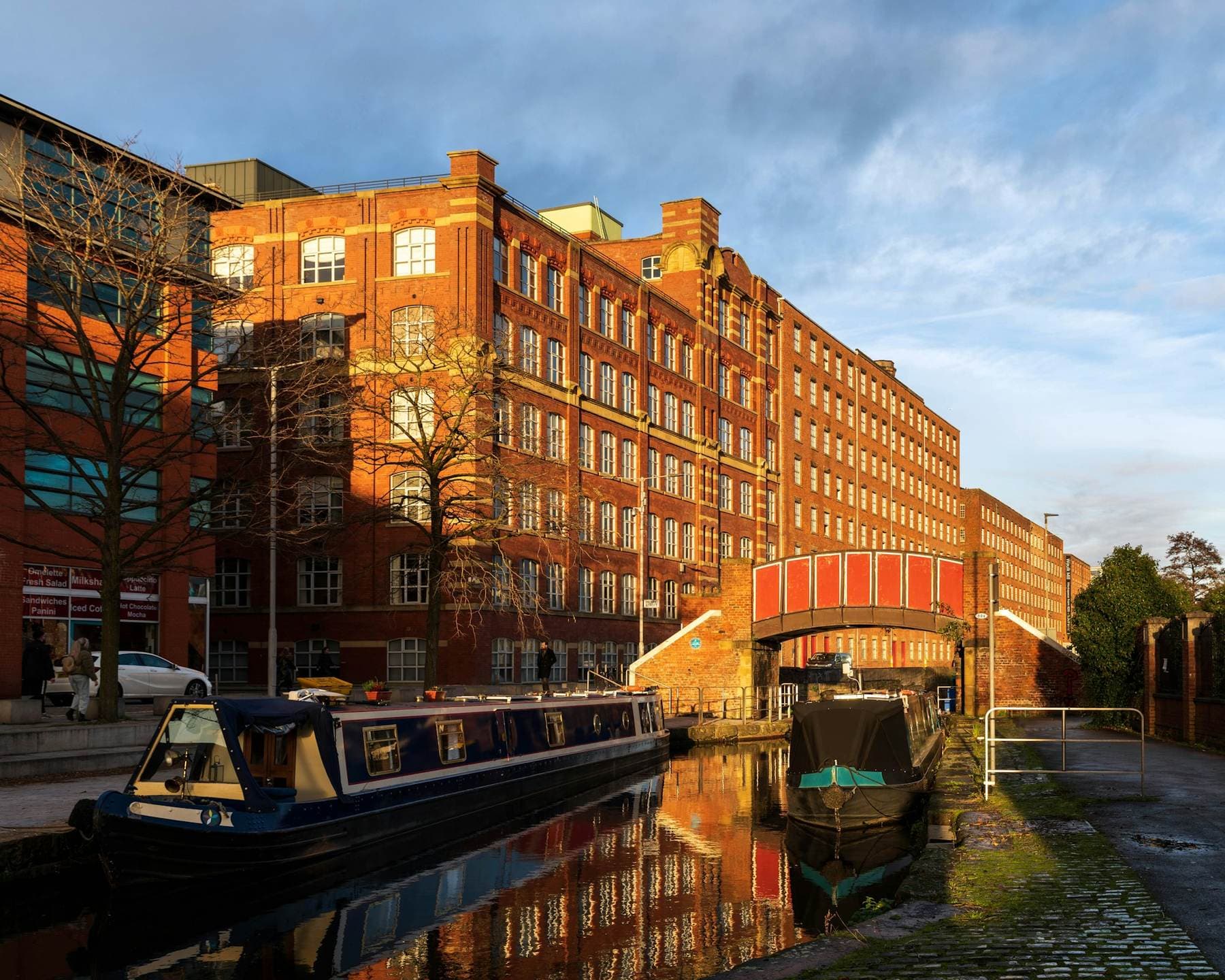
The Power of the RegionsThe Economic Engine Outside London
The vast majority of the UK’s business population resides outside London, driving foundational innovation across key operational sectors. Across all UK Nations and regions, SMEs provide the vast majority of employment—reaching as high as 77% in Northern Ireland, 74% in Wales, and 72% in the South West, compared to just 51% in London. ONS reports show the distribution of companies across the UK as follows:
The ONS table in full, 2024 to 2026
Source: Inter-Departmental Business Register (IDBR), Office for National Statistics.
77%
of jobs in SMEs, Northern Ireland
74%
in Wales
72%
in the South West
51%
in London
However, traditional institutional capital frequently overlooks companies in the regional lower-mid market. Concentrated in London financial hubs—where 25% of the UK’s High Growth Enterprises (HGEs) reside—institutional investors often miss off-market opportunities or demand transaction sizes that exclude high-quality businesses earning between £0.5m and £2m EBITDA. This mismatch creates a compelling strategic opportunity:
Rich origination landscape: A dense, highly diverse ecosystem of regional SMEs seeking capital and strategic direction.
66%
of PE funds in London and the South East
64%
of targets in the regions
Under-represented competition: 66% of private equity funds are located in London and the South East, when 64% of targets sit in the Regions, allowing for genuine partnership-led discussions rather than congested auctions for those who are local.
Resilient foundations: Expanding regional platforms to achieve broader market coverage is inherently more sustainable than scaling metropolitan businesses into regional markets.

Manchester and DevolutionA Blueprint for Regional Growth
The renaissance of regional hubs is no longer a strategic ambition—it is an established reality. Leading this transformation is Greater Manchester, which has solidified its position as the UK’s primary regional “second city.”
Under the high-profile leadership of Mayor Andy Burnham, Greater Manchester has demonstrated how strategic local governance, infrastructure investments, and private-public alignment can create a self-sustaining ecosystem for enterprise. Known as the UK’s Top Digital Tech City outside London, Manchester is home to over 10,000 tech businesses and a £5 billion digital economy, with Beauhurst data showing a 46% increase in private companies and a 78% rise in high-growth businesses. Dubbed by business leaders as a secondary hub of national economic decision-making (“Number 10 North”), Manchester showcases the transformative power of devolution across a thriving regional hub:
64%
five-year business survival, South West
Growth Assets & Talent Clusters: World-class universities (such as the University of Manchester and Manchester Met), digital tech hubs, and healthcare innovation corridors attract top-tier talent and seed high-growth commercial ventures. Regional hubs outside London continue to prove their resilience, with regions such as the South West achieving 5-year business survival rates as high as 64%.
Local Governance & Devolution: Expanding devolved powers over transport, skills, housing, and economic development enable local leaders to tailor policy directly to business needs.
Ecosystem Synergy: Regional mayors and private investment partnerships are aligning to showcase regional investment opportunities, proving that local decision-making fuels faster execution and sustainable expansion.
10,000+
tech businesses in Manchester
£5bn
digital economy
+46%
private companies (Beauhurst)
+78%
high-growth businesses (Beauhurst)
As devolution momentum spreads across other regions, similar growth dynamics are taking hold across the UK, creating a fertile environment for regional businesses to flourish.
The Independence View
Our conviction in regional markets directly shapes our investment model. We believe that combining a dedicated regional perspective with a specialized sub-scale focus delivers a profound competitive advantage in deal origination and value creation.
Sub-scale businesses (typically generating £0.5m to £2m EBITDA) often possess exceptional core operations but require capital, governance, and M&A capabilities to achieve critical mass. According to research by the British Business Bank, place-based interventions and dedicated debt programs—such as the Nations and Regions Investment Funds and the Growth Guarantee Scheme, which unlock over £5bn in finance—are essential to addressing long-standing regional financing disparities across the UK.
£5bn+
of finance unlocked by the British Business Bank’s regional programmes
- Aggregation Strategies: We acquire and aggregate complementary sub-scale targets to build unified platforms reaching £7m to £10m+ EBITDA.
- Multiple Arbitrage & Scale: Transforming regional sub-scale entities into structured, institutional-grade platforms unlocks significant valuation expansion and attracts interest from international acquirers and mid-market private equity.
- Active Operational Empowerment: We work shoulder-to-shoulder with localised operational teams, recruiting proven industry executives to execute target operating models while leaving founders to focus on operational excellence.
As devolution deepens and regional growth hubs accelerate, the disconnect between London capital and regional enterprise represents one of the most attractive investment frontiers in the UK. By remaining firmly rooted in the regions and championing sub-scale businesses, Independence Capital is uniquely positioned to identify hidden market leaders, forge strong regional partnerships, and back exceptional local leadership teams in building the national champions of tomorrow.